

Football People Weeks: Community Actions for Inclusion
Football People Weeks: Community Actions for Inclusion
Every year, thousands of groups across the world take part in Football People Weeks, the biggest social change campaign in football. Through small grants and community support, Fare helps activists, clubs, NGOs, fan groups, youth organisations and creative collectives challenge discrimination and celebrate diversity in their local contexts. From workshops and tournaments to artistic projects, conferences and campaigns, these initiatives show how football can bring people together, amplify marginalized voices and build more inclusive societies.
Below is a selection of actions carried out during Football People Weeks, highlighting the passion and creativity of communities using the game to drive change.
Colin Yates – A Picture Paints a Thousand Words (United Kingdom)
Artist Colin Yates used his long-standing portrait work on Black and minority ethnic footballers to create an educational film that brings pioneering figures in the game to life. The project centred on fine-art portraits and storytelling to challenge racism, celebrate trailblazers and show how representation in football can shift attitudes.
The film introduces audiences to players such as Walter Tull, Arthur Wharton, Jack Leslie, Emma Clarke, Eniola Aluko, Hope Powell, Justin Fashanu, Raheem Sterling and Marcus Rashford. Combining powerful visuals with accessible narration, it is designed as a flexible resource for schools, youth groups and community organisations, especially at a time when in-person workshops have been restricted by COVID-19.
By sharing these stories online and through local partnerships in Coventry and beyond, the project offers a lasting tool that connects anti-racism and inclusion with the history and present of football.
You can read more about their work here.
Abriendo La Cancha Fútbol Feminista – Music Video Against Discrimination (Argentina)
Abriendo La Cancha, a feminist football organisation in Córdoba, works with women and gender-diverse people, using football as a tool for empowerment. Through their “Somos Nosotras” football school, they support girls from marginalised neighbourhoods who often face intersecting forms of discrimination.
This project invited those girls to create and star in a music video, developing the lyrics and content themselves. Workshops explored the different kinds of discrimination they see in their communities and around the world, linked to gender, ethnicity, sexual orientation, poverty and nationality. The resulting video expresses their experiences of playing football, the barriers they confront and the joy they find on the pitch.
By sharing the finished work on digital platforms and involving local cultural or sports figures as guests, the project amplified young girls’ voices and showcased football as a space of resistance and creativity.
You can read more about their work here.
Club de Fútbol Popular Orihuela Deportiva – Football, Refugees and Anti-Racism (Spain)
CF Popular Orihuela Deportiva developed a multi-part programme connecting football with anti-racism, refugee rights and everyday intercultural dialogue in the Vega Baja region. The club worked with local organisations and writers to highlight the realities facing refugees and migrants in Spain.
Planned activities included a conference with NGO Vega Baja Acoge and author Antonio Trives on refugee journeys, an event on inclusive football with CAP Ciudad de Murcia–Cepaim, and an intercultural gastronomic day celebrating the cuisines of Orihuela’s main migrant communities.
By combining learning spaces, shared food and visible anti-racist messages at matches, the project strengthened Orihuela Deportiva’s role as a community hub where football is firmly linked to solidarity and inclusion.
You can read more about their work here.
FAME Foundation – Let Girls Play Conference (Nigeria)
FAME Foundation organised the Let Girls Play conference in Abuja, focusing on refugee girls and young women in internally displaced persons’ camps who aspire to careers in sport. The event formed part of #FootballPeople weeks and the International Day of the Girl Child, bringing together coaches, sports administrators, current and former athletes and international speakers.
Two panel discussions explored the practical steps for building a successful football career and the wider role of sport in empowering girls. Refugee participants then took part in a friendly football match near their camp, putting the conference messages into practice on the pitch. A parallel social media campaign promoted gender equality in sport and called for supportive policies for refugee girls.
Insights from the event were compiled into a mini handbook, “Success tips for refugee girls in sports,” to be used by camp coordinators and sports teachers as a long-term resource.
You can read more about their work here.
Girl Power Organisation – Football, Health and Ending Child Marriage (Pakistan)
Girl Power Organisation ran a two-day programme in Karachi combining football activities for girls with workshops for parents on health, sport and the dangers of early marriage. The initiative specifically targeted communities where girls have limited access to education and social opportunities.
On the first day, coaches led discussions with parents on healthy lifestyles and the serious consequences of child marriage, supported by data on maternal mortality. Girls aged 10–13 then participated in football-based games and skill sessions organised in small groups. A second event brought these activities to a rural area of Karachi, encouraging girls to step outside their homes, play together and learn about their rights.
At the end of both events, participants received certificates recognising their involvement, reinforcing the message that girls deserve time, space and support to play and grow before marriage.
You can read more about their work here.
Sistrum – 20 Years of Lesbian Football: Chrząszczyki’s Herstory (Poland)*
Sistrum, Space of Lesbian* Culture, partnered with Chrząszczyki Sports Club to celebrate and archive twenty years of lesbian* football in Poland. The project responded to the lack of formal records on Chrząszczyki’s history by creating a permanent cultural and historical resource.
The team produced a documentary film featuring interviews with past and present players, capturing how the club has shaped their lives and the wider lesbian* community in Warsaw. An interactive exhibition showcased memorabilia, photographs, trophies and other artefacts, hosted alongside a debate on lesbians* in sport, a quiz and the film screening.
The week-long exhibition culminated in a birthday party with performances and games, turning Chrząszczyki’s story into a shared community celebration and an act of visibility in a context of rising intolerance.
You can read more about their work here.
Lewes FC – Sports Media Pathways for Diverse Journalists (United Kingdom)
Lewes FC, the first club in the world to introduce pay parity between its men’s and women’s teams, designed a practical workshop to open up sports media careers to people from diverse and disadvantaged backgrounds. The event was scheduled around a Lewes FC Women match against Leicester City.
Participants received mentoring from experienced journalists and practitioners in areas such as videography, photography, commentary, presenting and match reporting. They then applied their skills in real time by covering the game, with support from their mentors. Selected pieces were shared through partner media outlets and Lewes FC’s own channels, providing tangible portfolio material.
By increasing both the visibility of women’s football and access to media careers, the project advanced gender equality in sport and helped diversify who tells football’s stories.
You can read more about their work here.
Foot Ensemble – “A Gay Player in My Team?” Serious Game (France)
Foot Ensemble launched “A gay player in my team?”, a short, interactive video game designed as a training and awareness tool for young people in football. The game formed part of a regional anti-discrimination tournament and was introduced through an on-site workshop and demonstration.
Participants play through ten-minute scenarios set inside a football club, taking on the roles of different characters and confronting everyday homophobic situations and reactions. Choices lead to different outcomes, encouraging players to reflect on the consequences of their decisions and to consider more empathetic responses. Sessions take place individually and anonymously, allowing honest engagement without peer pressure.
Aggregated statistics from the game provide organisers with insights into attitudes and behaviours, helping them tailor future education work and deepen conversations about inclusion in football.
You can read more about their work here.
League of Tolerance – FootballForShe National Conference (Ukraine)
League of Tolerance organised the FootballForShe National Conference in Ivano-Frankivsk, bringing together players, coaches, educators and young leaders to promote women’s and girls’ participation in football. The three-day programme combined discussion, training and mixed-gender play.
A panel event featured female role models, including a FIFA referee, youth captains, players and coaches, who spoke about pathways from grassroots to elite level. Workshops introduced tools such as the Women Global Pioneers resource to explore women’s football heritage, a gender equality self-evaluation instrument for educators and UEFA’s Together #WePlayStrong campaign.
The conference concluded with a football3 tournament involving around 100 participants of different ages and backgrounds, including ethnic minorities, internally displaced people and people with disabilities. Using streetfootballworld’s methodology, matches were structured around fair play, dialogue and shared decision-making.
You can read more about their work here.
The DO School – Co-Creating Solutions to Elevate Women in Football (Germany)
The DO School organised a DO Day workshop focused on co-creating concrete solutions to elevate women in and through football. Using its established innovation formats, the event guided a diverse group of participants through a structured process from challenge definition to actionable ideas.
Through activities such as systems mapping, brainstorming, idea development and pitching, participants examined barriers facing women in football and designed practical interventions. Depending on the chosen format, the group either developed prototypes to be tested or immediate actions that could be implemented quickly.
By engaging women working in football, as well as stakeholders from organisations like FIFA and UEFA, the workshop created a collaborative space where new partnerships and strategies for gender equality in sport could emerge.
You can read more about their work here.
Istanbul Bilgi University Sports Management Department & CSMD – Dreams of Social Inclusion in Football (Turkey)
Istanbul Bilgi University’s Sports Management Department and the Association for Struggle Against Sexual Violence (CSMD) co-hosted a one-day conference titled “Dreams of Social Inclusion in Football: Practices and Ideas”. The event explored how football in Turkey can become more inclusive of girls, women and LGBTI+ people.
The programme featured an international panel discussion followed by parallel roundtable workshops. Fans, players, coaches, managers and administrators were invited to identify key problems in the field and propose rights-based solutions. A closing “harvesting” session brought together workshop outcomes, highlighting common themes and practical recommendations.
Anchored in a context where football is often male-dominated and exclusionary, the conference created a space for networking, knowledge-sharing and collective reflection on how to embed social inclusion and gender equality in the sport.
You can read more about their work here.
Asociación DEPORTVIDA – Women’s Football Festival: Playing for Equality (Peru)
Asociación DEPORTVIDA organised the Women’s Soccer Festival: Playing for Equality in Trujillo, creating a meeting space for women footballers, girls and stakeholders to discuss equality in sport. The festival focused on access to public sports spaces, strategies to strengthen women’s football and challenging the stereotypes that label certain sports as “only for men.”
Activities included a workshop for journalists on how they cover women’s sport, and a panel featuring a Peruvian national-team player, a referee, a coach and a women’s football manager. They shared experiences and reflected on progress, obstacles and future goals. A football clinic for girls, led by a national-team player, offered practical training and inspiration on the pitch.
The festival was supported by partnerships with the Peruvian Institute of Sport (La Libertad), the National Association of Journalists (La Libertad), the La Libertad Women’s Football League and the Municipality of Trujillo, reinforcing a city-wide commitment to gender equality in football.
You can read more about their work here.
Latest News Articles
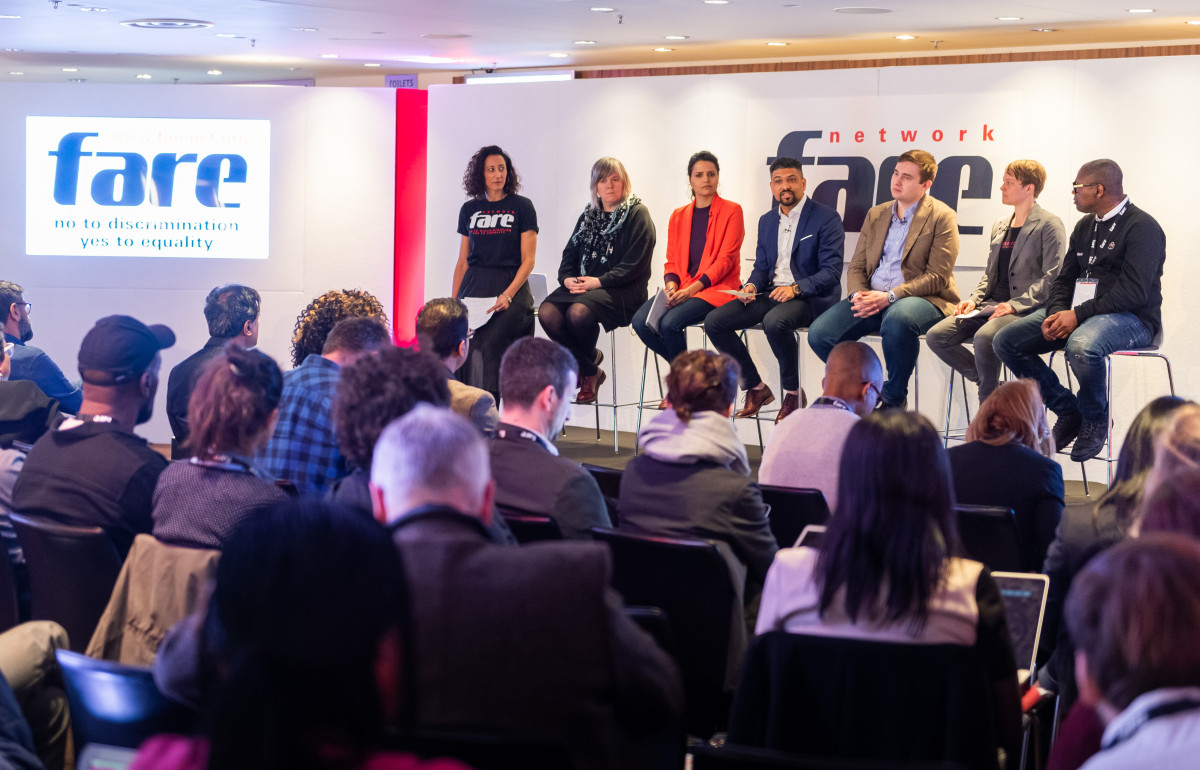
Call for Participation: An invitation to a Regional Balkan Forum
Fare network invites members and representatives of civil society and sport organisations from across the Balkans to take part in the Balkan Football…
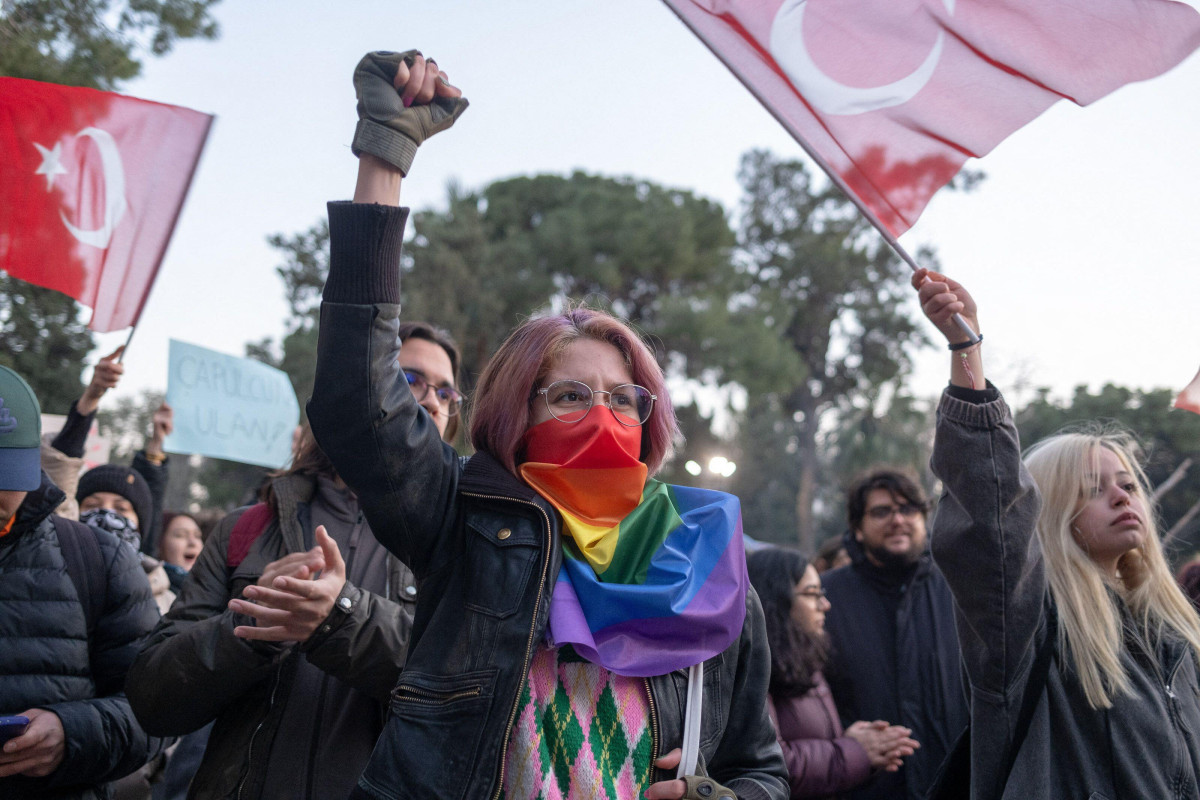
The Fare network condemns crackdown on LGBTIQ+ organisations in Turkey
The Fare network condemns the prosecution of LGBTIQ+ organisations in Turkey. In the early hours of Sunday, 13 September, Turkish police carried out…
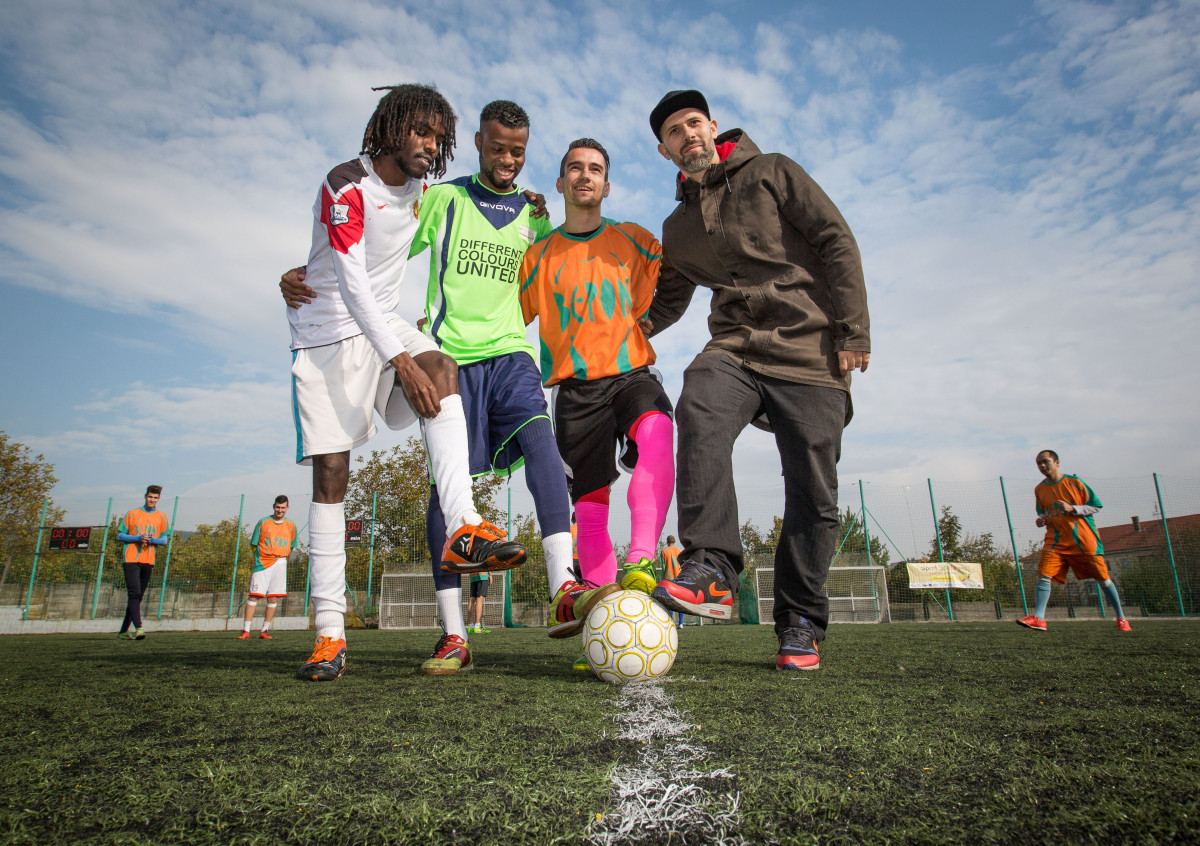
Fare Refugee Campaign 2026: successful grants
Fare Refugee Grants Successful grantees As part of the Fare Refugee campaign, Fare offered grants to organisations using football and sport to support…
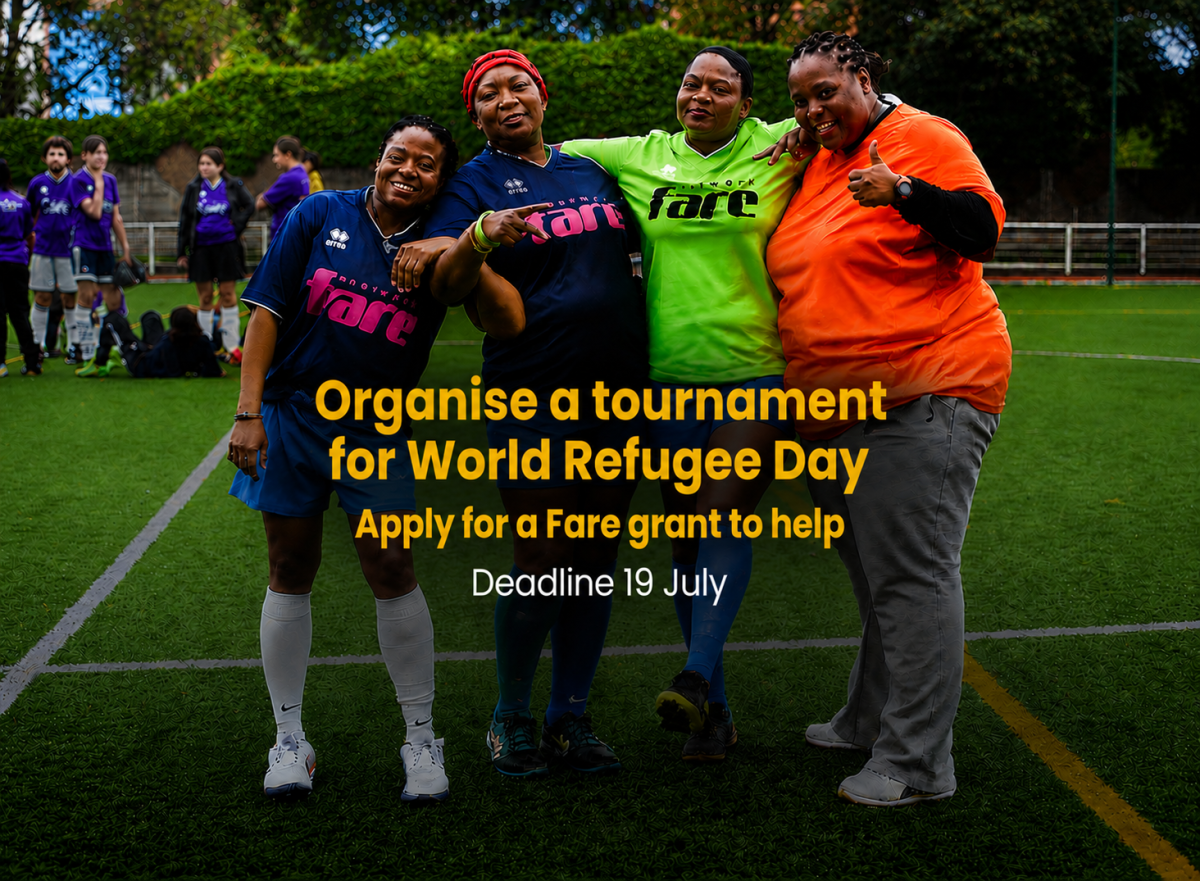
Celebrate World Refugee Day through Football
To mark World Refugee Day, we are launching the Fare Refugee Grants campaign to support organisations, grassroots clubs, NGOs, supporter groups, and…
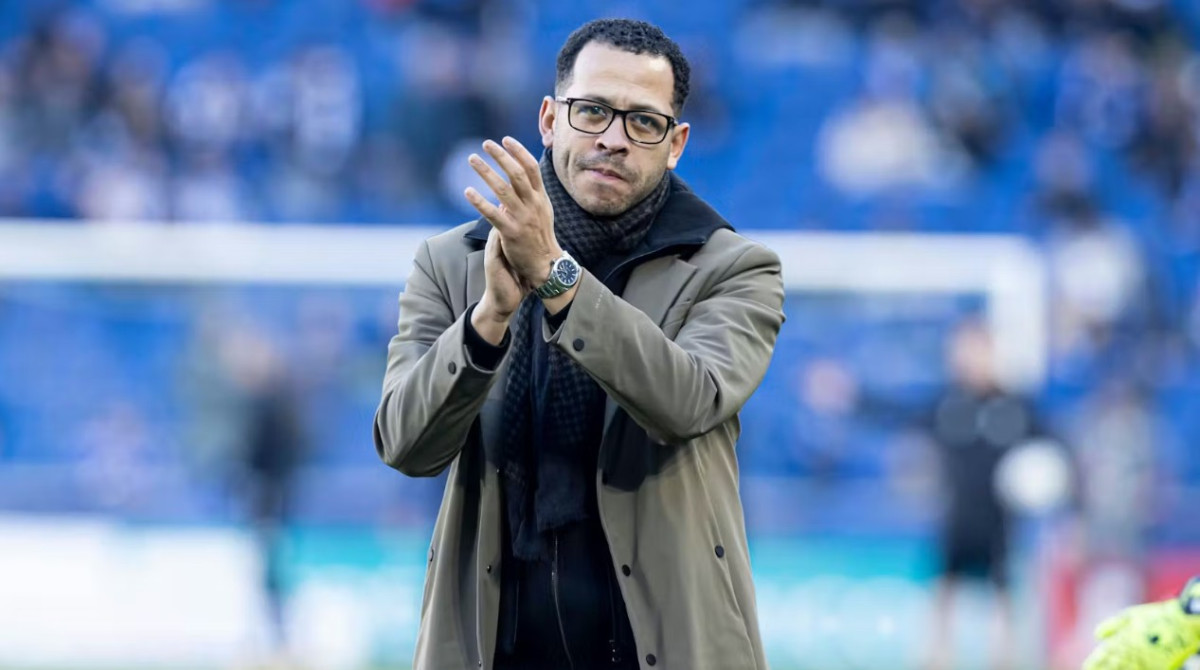
Is Liam Rosenior’s Chelsea appointment a landmark for diversity in English football?
Former Strasbourg, Hull City and Derby County coach Liam Rosenior has been named Chelsea FC’s new head coach, a historic appointment that is being celebrated as supporting racial diversity in football management.

 Report incident
